It looks
Two small cameras, one on a mast and one at the wrist. Neural networks trained on 48,000 pictures tell a toy car from a sock and say where each one lies.
Armling One
Armling picks up after everyday life. It starts with the floor: toys, socks and clothes, found with its own cameras and put where they belong.
Physics simulation of our prototype design, shown at 1.5× speed.
It starts with the floor
By evening the floor has filled up again. Armling drives through the room, works out what is lying there and puts each thing in its place.
Two small cameras, one on a mast and one at the wrist. Neural networks trained on 48,000 pictures tell a toy car from a sock and say where each one lies.
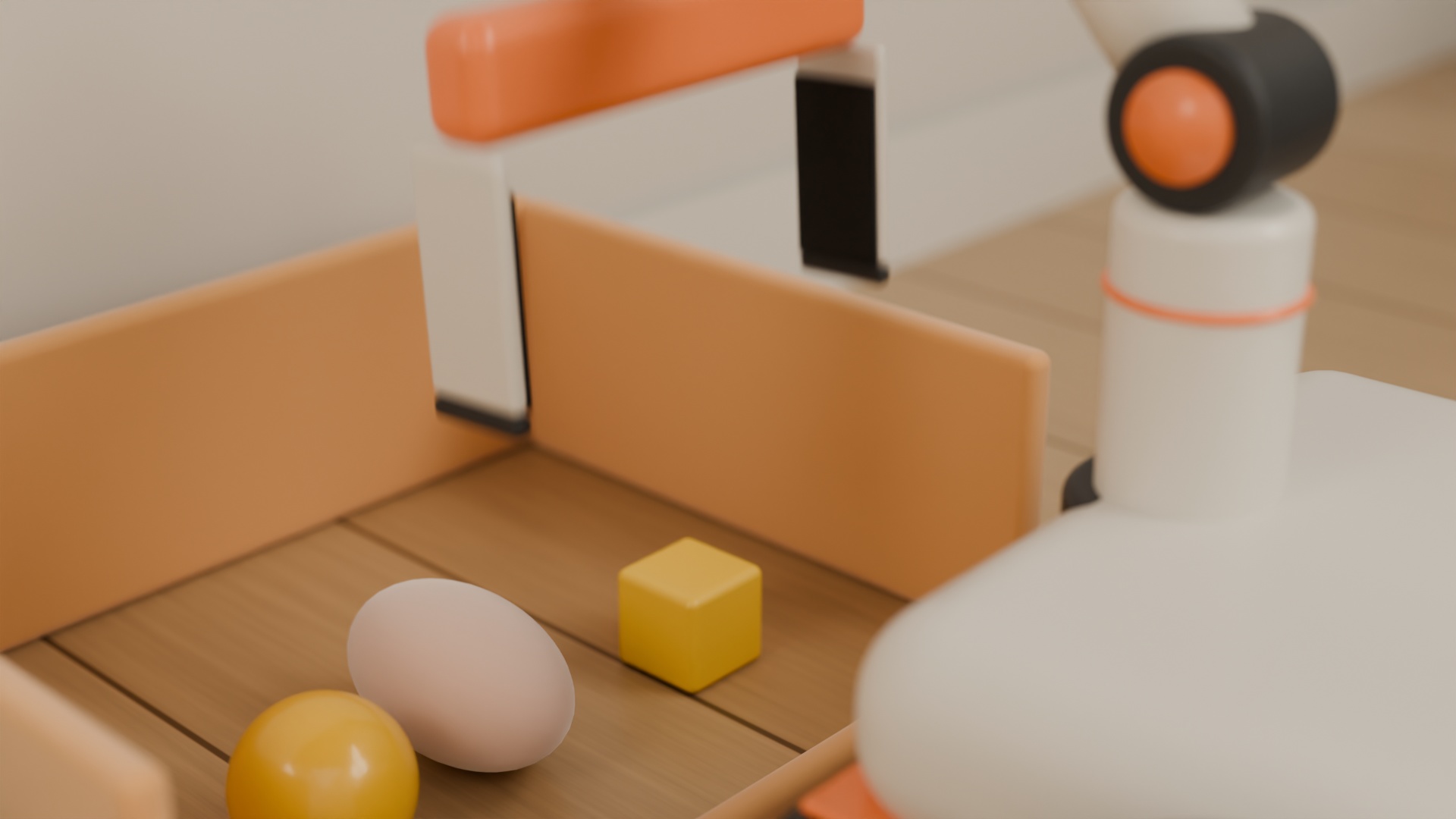
An 18 cm gripper on a four-joint arm. Wide enough for a towel or a soft toy, careful enough for a wooden block.
Toys go in one bin and clothes in another. Then it drives on to the next thing, until the floor is clear.
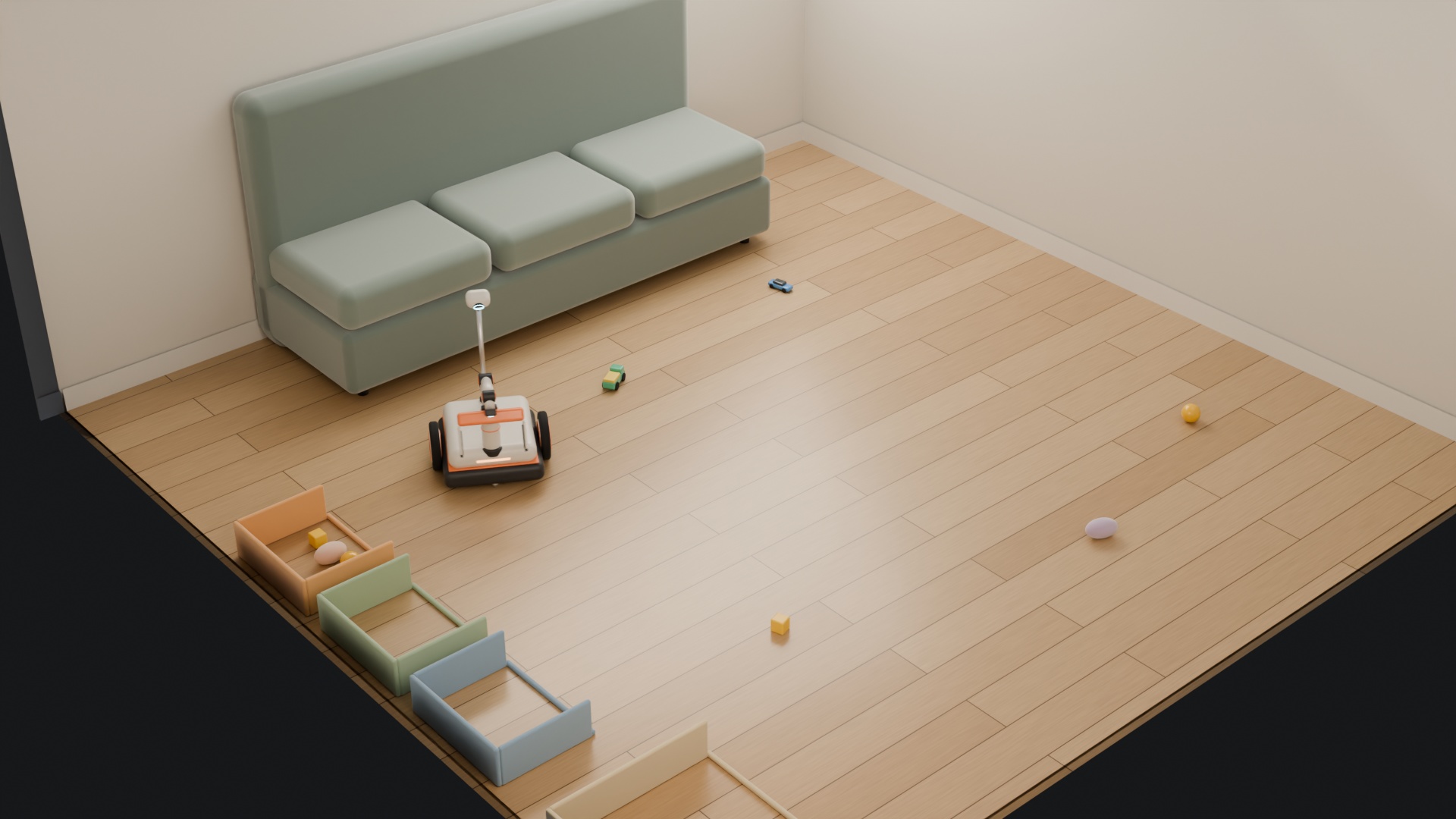
These results are from our physics simulator, where the motors, the grip and the falling toys follow the same laws as in a real room. The robot has not been built yet. That is the next step.
The robot
Low and compact, and strong enough to lift a pillow. Everything it needs is on board.
Prototype design. Sizes and parts will change as we build and test.
What comes next
A home has many small jobs. We take them one at a time, and each new one has to work in simulation before it earns a place on the robot.
Toys, socks, shirts and towels: found by camera, picked up and sorted. Pillows and small puzzle pieces are being worked on.
Building its own map, moving between rooms, and the first robot on a real floor.
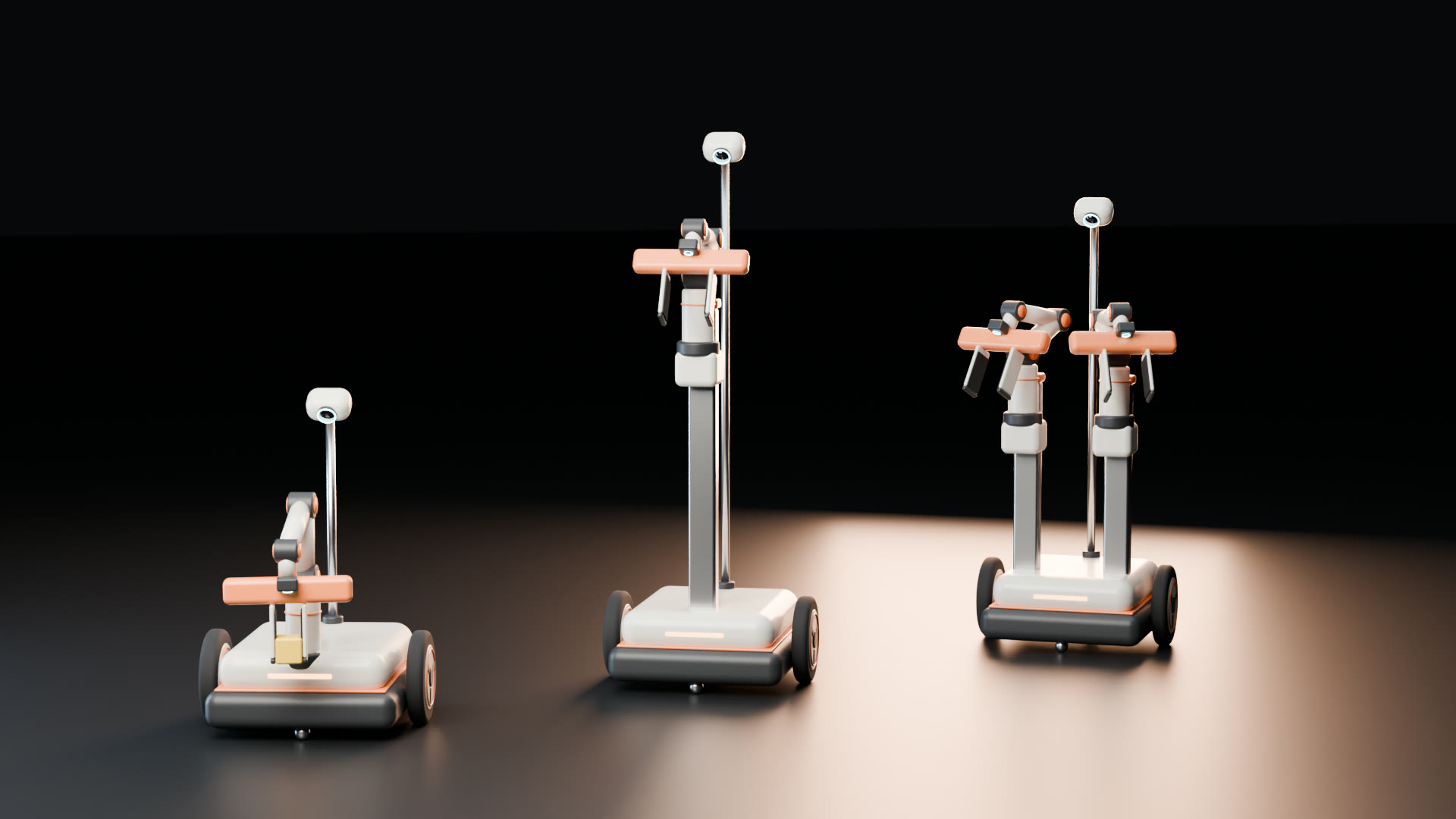
The same arm on a lifting column, to reach tables and counters: cups, plates, the things left out.
A second arm for the jobs that need one hand to hold and one to work, such as folding laundry.
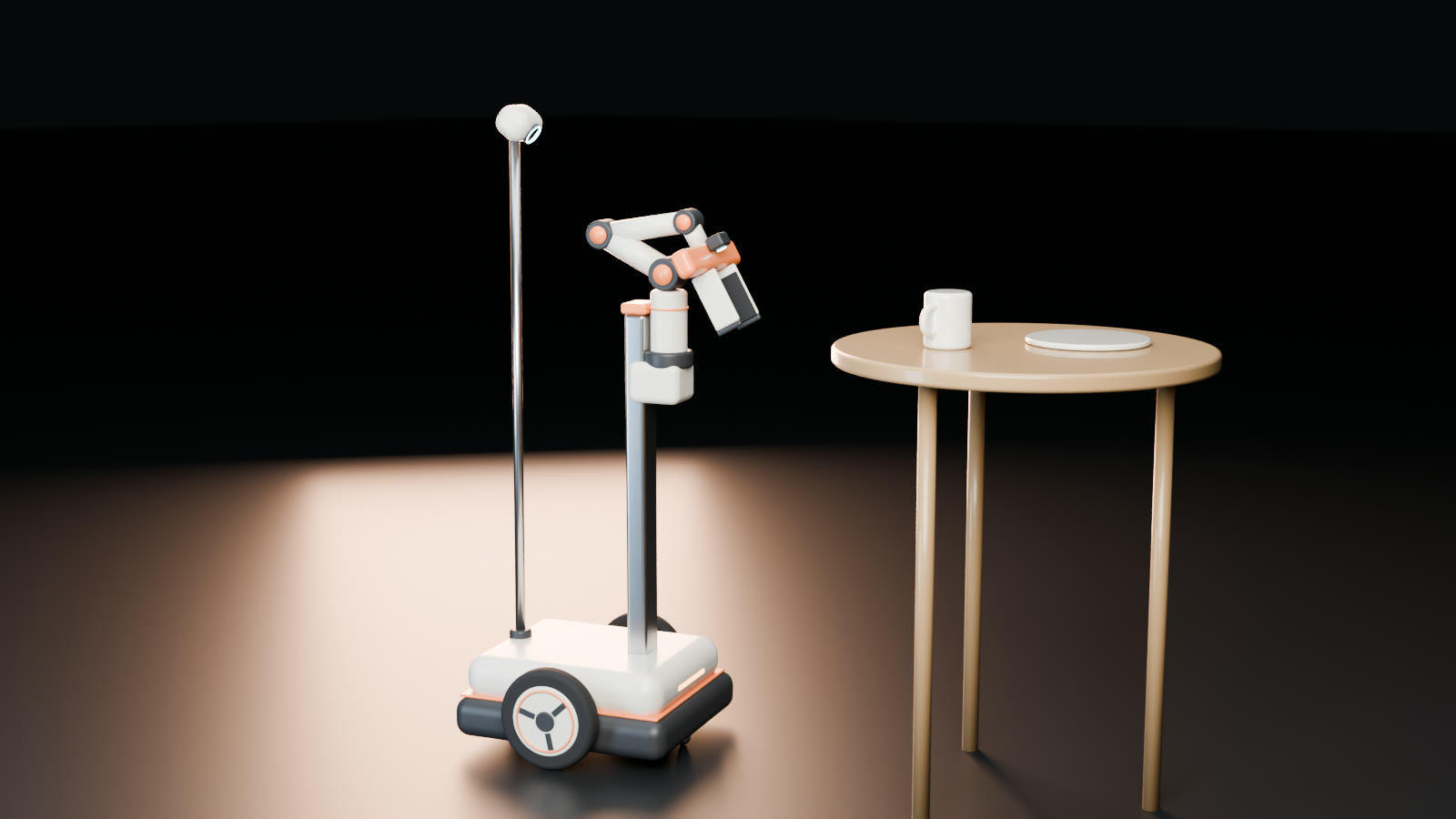
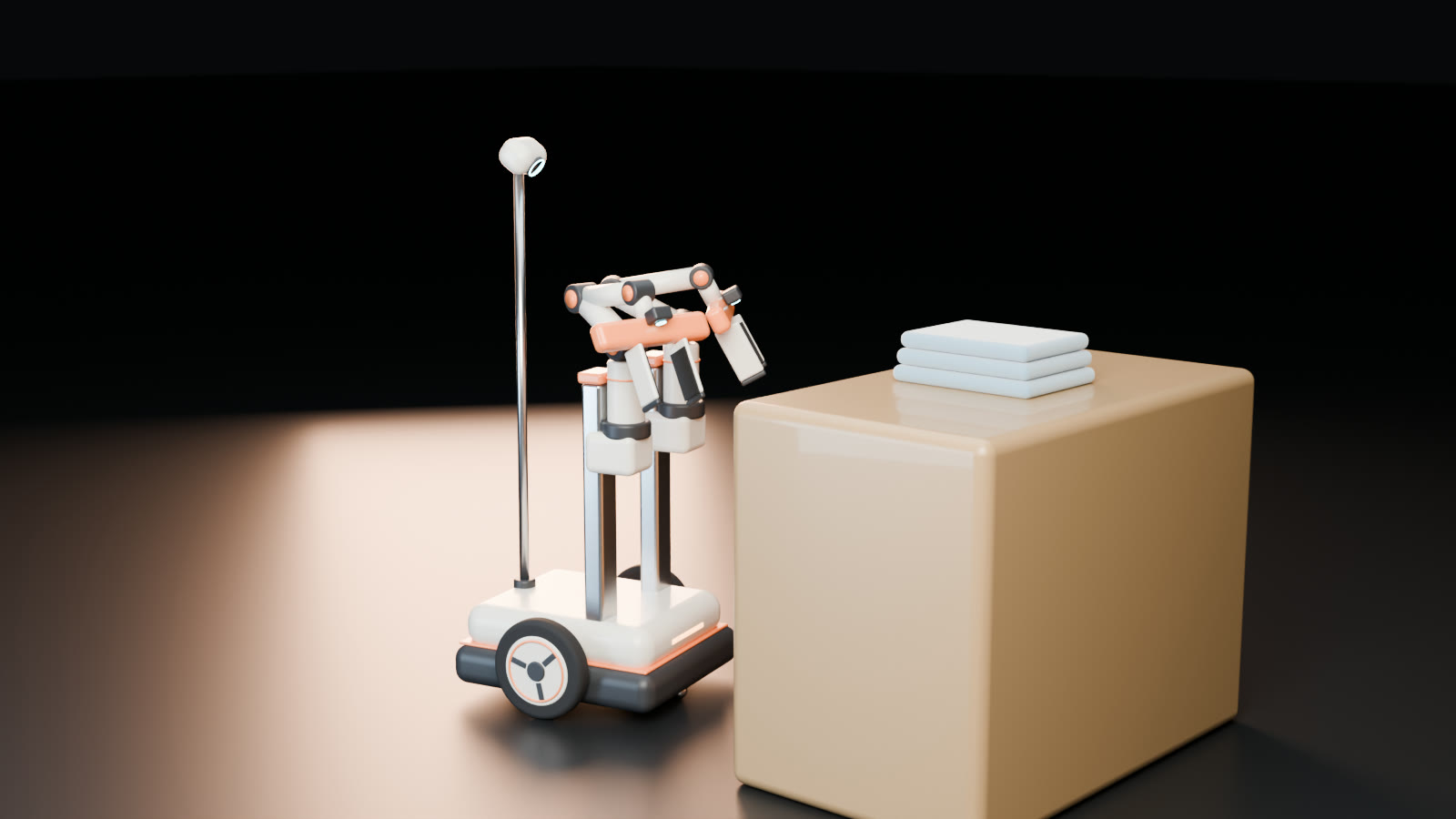
The two sketches are ideas. They have not been simulated or tested.
How we build
Every design is tried in a physics simulator first. The motors have their real strength limits. Cloth folds and slips. A ball rolls away if it is nudged.
A design that cannot do the job there does not get built. One that can is tested again in new rooms it has never seen.
The film at the top of this page was made the same way. Nothing in it is animated by hand: every movement is taken from one recorded simulation run.